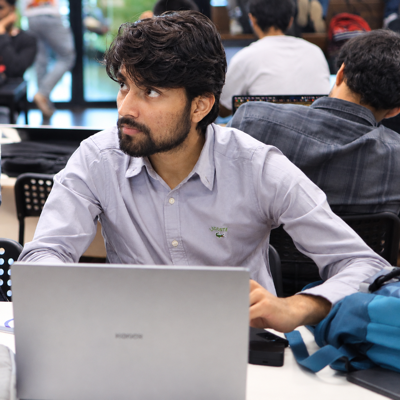
I wasn’t preparing for Google Summer of Code 2024. I was contributing to open source, working on CNCF projects and figuring out my transition from cybersecurity to software engineering. Then, somewhere around the end of March, I realised that GSoC applications were already open and I had roughly 10 days left before the deadline.
That was not exactly the ideal GSoC preparation timeline.
I had known about Google Summer of Code for years, but I had never seriously planned to apply. I was already contributing to open source, but mostly because I wanted to get better at software engineering and learn how real projects worked. GSoC was not really part of the plan.
Then I checked the dates.
Contributor applications for GSoC 2024 opened on March 18, and the final deadline was April 2, 2024, at 18:00 UTC. In India, that meant 11:30 PM IST. Suddenly, I had around 10 days to figure out whether I could pull this off.
Most people preparing for GSoC start months earlier. I had to start almost at the finish line.
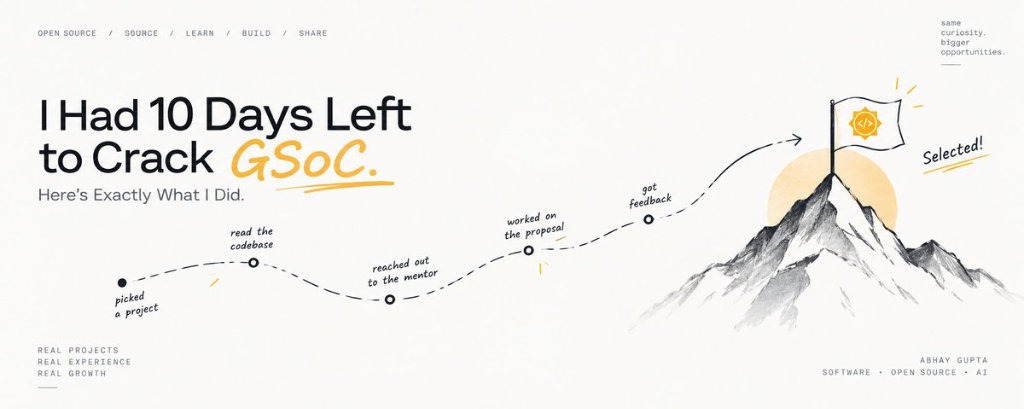
Before GSoC, I Was Just Contributing to Open Source
A few months earlier, I had started taking open source more seriously. I had recently moved from cybersecurity into software development, and I wanted to go beyond building small projects on my own.
So I started contributing to real repositories and working around CNCF projects, including Kubernetes and Knative. That experience taught me things that you simply don't learn while working alone: how to understand an unfamiliar codebase, how to read issues, how to work with maintainers, how pull requests are reviewed and how to make a change without breaking something that other people depend on.
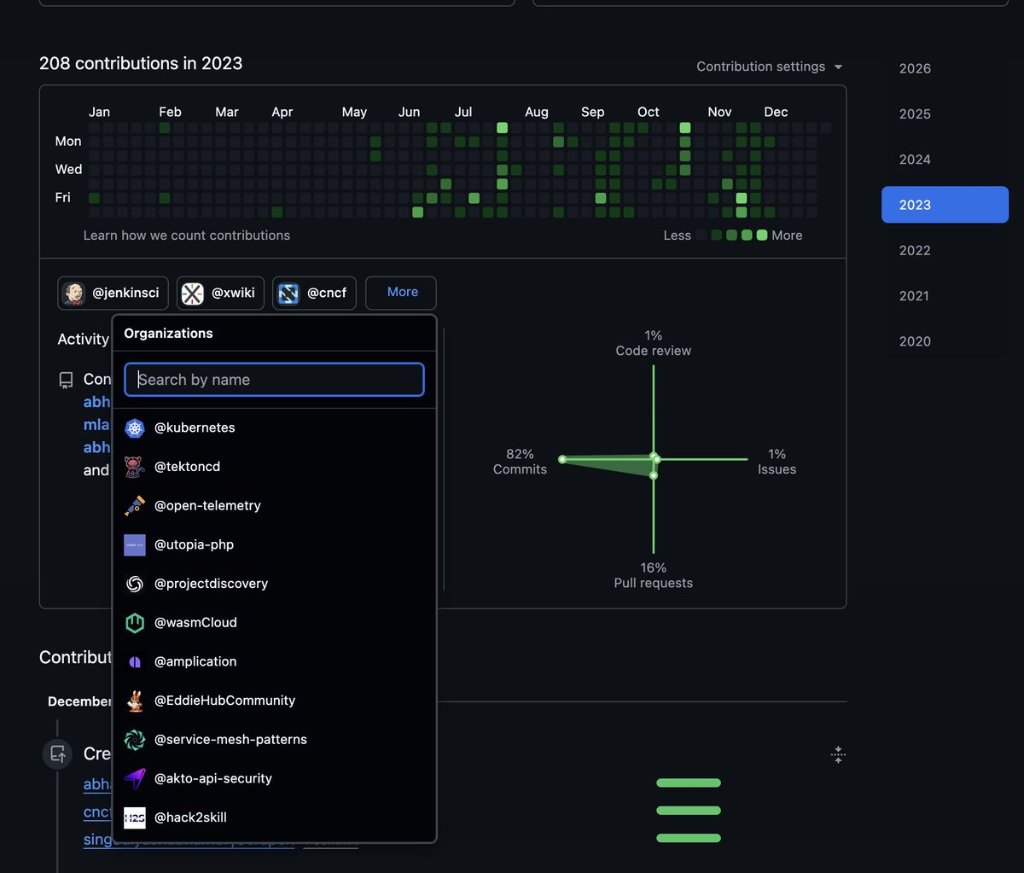
At the time, I wasn't doing any of this because I thought it would help me get into GSoC. I was just trying to become a better engineer.
Looking back, that turned out to be my biggest advantage. I already knew what contributing to an open source project felt like, so I wasn't starting from zero when I discovered GSoC.
Then I Realised I Had About 10 Days Left
Once I realised GSoC applications were already happening, I stopped trying to think about it as some huge competition and started with a simple checklist.
I asked myself whether I already had the basics: development experience, some open source contributions, enough technical knowledge to understand a project quickly, and enough time to write a proposal. The first three answers were yes. The last one was questionable.
So I started going through the list of organisations and project ideas.
There were hundreds of projects, and there was no way I could deeply research all of them in the time I had. I needed to be selective. I was looking for something that matched my background, was technically interesting and, most importantly, was a project I would actually want to work on for the next few months.
That is when I found Chromium.
Out of Hundreds of Projects, One Stood Out
While going through the project ideas, I came across a Chromium project related to improving the Web Audio AudioBuffer implementation. I read the description, went through it again, and then started checking the repository to see whether I could actually understand what was going on.
My first thought was simple: "I think I can do this."
I was also specifically interested in Chromium. Since I had already started contributing to open source, I wanted to work on something that would push me into a much larger and more mature codebase. Chromium was exactly that. It was a serious project, the engineering environment was completely different from what I had worked on before, and there was a lot for me to learn.
GSoC allowed contributors to apply to multiple projects, but I decided to focus on one. I didn't want to submit three applications just because I could. I would rather spend the little time I had properly understanding one project and making one strong attempt.
So the bet was Chromium.
I Spent Almost 15 Hours Just Understanding the Project
I knew I had a problem. I had found the project, but finding a project is easy. Understanding it well enough to work on it is the difficult part.
So I sat down and started digging into the codebase. I spent roughly 15 to 16 hours going through the relevant source files, documentation, existing implementation, tests and related code. I was trying to understand where the functionality lived, how it worked, what was missing and what would actually need to change.
For most of that time, I wasn't writing code.
I was reading code.
And honestly, there were moments when I wondered whether I had picked the wrong project. Chromium is huge, and when you are looking at a codebase like that for the first time, everything seems connected to everything else. One file leads to another, one class leads to another and suddenly you are reading code you never planned to read at 3 AM.
But slowly, it started making sense.
I wasn't trying to understand all of Chromium. I only needed to understand the part relevant to the project well enough to explain the problem and think about a realistic solution.
That was the turning point.
I Changed My Approach
Initially, I thought I needed to make some contribution quickly because there wasn't much time left. But after spending hours in the repository, I realised that rushing into code just to have a PR attached to my name wasn't going to help much.
Instead, I started thinking about the project from the mentor's perspective:
- What exactly is the problem?
- What is the current implementation doing?
- What could be improved?
- What would the implementation look like?
- How would I test it?
- And what could realistically be completed during the GSoC coding period?
I started making notes and breaking the project into smaller pieces. That eventually became the foundation of my proposal.
The goal wasn't to sound impressive. I wanted to show that I had actually understood what I was applying to work on.
Then I Reached Out to the Mentor
Once I had enough context, I contacted the mentor.
I didn't send a generic message asking how I could get selected for GSoC. I explained what I had understood about the project, what I thought could be improved and how I was thinking about approaching it.
That gave us something concrete to discuss.
The mentor shared the Chromium proposal template with me, and I started working on it. From there, the proposal went through multiple iterations. I would get feedback, rethink parts of the approach, update the proposal and then come back with more questions.
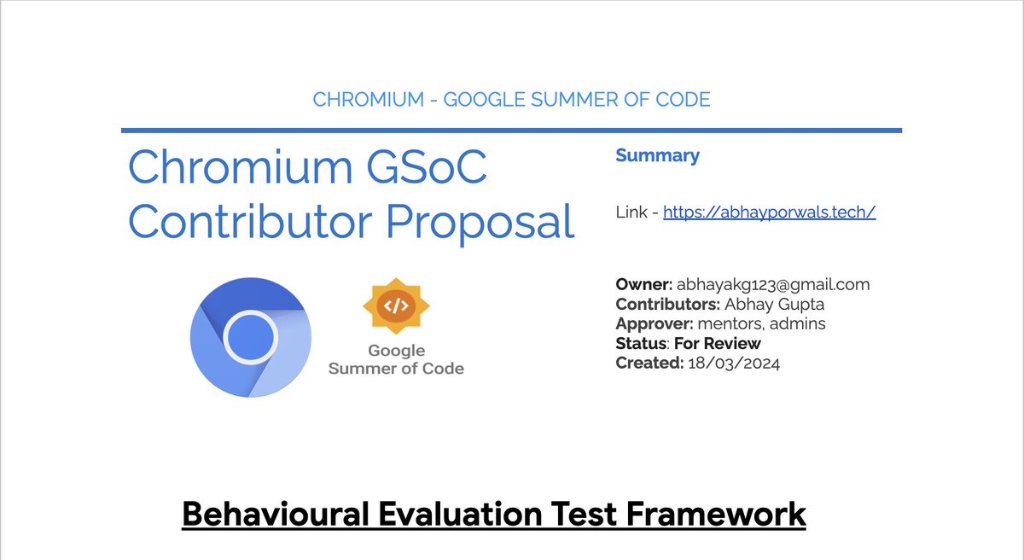
That back-and-forth was actually one of the most useful parts of the whole process. It wasn't just about making the proposal look polished. We were discussing the actual engineering work, and every conversation helped me understand the project better.
The mentor was already talking to other potential contributors, so I still had no idea whether I would be selected. Getting feedback was encouraging, but I knew it wasn't a guarantee.
I just kept working on the proposal.
I Submitted Before the Deadline
Eventually, I had to stop editing and submit it.
The GSoC 2024 contributor application deadline was April 2, 2024. I submitted my proposal before the deadline rather than waiting until the last few hours.
And then there was nothing left to do.
That was probably the strangest part. I had spent days trying to understand the project, talking to the mentor and improving the proposal, and suddenly all I could do was wait.
I didn't know how many people had applied. I didn't know how my proposal compared with the others. I didn't even know whether the mentor's feedback meant I had a real chance.
So I tried to forget about it.
At least for a while.
May 1, 2024
GSoC 2024 results were scheduled to be announced on May 1 at 18:00 UTC, which was 11:30 PM IST for me.
That night, I was awake and scrolling through Twitter.
Then I started seeing acceptance posts.
One after another.
I checked my email. Nothing.
I checked again. Still nothing.
So I started looking through Reddit to see whether other people had received their results. People were posting that acceptance emails were arriving, while others were still waiting. Someone mentioned that rejection emails could arrive later, and that was enough for me to start losing hope.
Maybe I hadn't made it.
After spending all those days on the proposal, I was already mentally preparing myself for that possibility.
Then, while I was still scrolling and about to put my phone away, a notification appeared.
An email from Google Summer of Code.
I opened it.
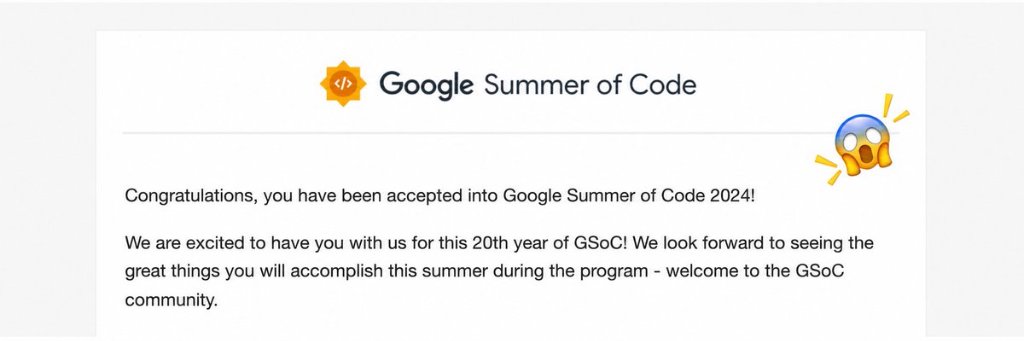
I had been selected.
Google Summer of Code 2024. Chromium. Web Audio.
For a few seconds, I just stared at the screen.
I had discovered GSoC with roughly 10 days left, picked one project, spent almost 16 hours understanding it, worked with the mentor on the proposal and somehow ended up getting selected.
That was a pretty good way to end the night.
So, What Actually Helped Me Get Selected?
The biggest lesson from this experience is that I didn't really start with 10 days of preparation. I started with months of previous work that happened before I even decided to apply.
My open source contributions mattered. My software development experience mattered. Knowing how GitHub, issues, pull requests and maintainers worked saved me a lot of time.
The actual 10-day strategy was fairly simple:
- Understood how GSoC worked and confirmed eligibility immediately.
- Narrowed hundreds of organisations down to one project I genuinely wanted.
- Spent deep time understanding the actual codebase instead of only reading the project abstract.
- Contacted the mentor with concrete technical context rather than generic inquiries.
- Treated the proposal as an engineering specification, not an academic essay.
- Iterated relentlessly based on feedback and submitted comfortably before the deadline.
There was no secret GSoC hack behind it. I was just using the limited time I had as carefully as possible.
What I Would Do Differently Today
Would I recommend starting your GSoC preparation 10 days before the deadline?
No.
I got away with it because I already had open source experience and enough software development knowledge to move quickly. Without that foundation, 10 days would have been nowhere near enough.
If I were applying again, I would start months earlier. I would contribute to the target organisation before applications opened, participate in discussions, understand the codebase and build some familiarity with the community.
That would give me much more time to learn, make contributions and write a better proposal.
But I would keep one thing exactly the same: I would still choose a project I genuinely wanted to work on.
Even if I hadn't been selected, the time I spent understanding Chromium would not have been wasted. I learned how to approach a massive codebase, how to communicate with maintainers and how to think about a problem before jumping into implementation.
That experience stayed with me long after the selection email.
A Few Resources to Start With
If you're preparing for Google Summer of Code, start with official resources instead of relying only on generic "How to Crack GSoC" articles:
- Google Summer of Code Portal
- How GSoC Works
- GSoC Contributor Help & Guides
- Chromium Project Documentation
You can also check my GitHub profile (@abhayguptas) to see some of the open source work I was doing around that period.
One More Article?
This article explains how I found the project and got the proposal submitted with roughly 10 days left.
There is another part: the granular day-by-day technical execution. How I shortlisted the project, what I looked for inside the repository, how I approached the mentor, how I structured the proposal and the small things that made the application stronger.
Maybe the next post will be:
"I Had 10 Days for GSoC. Here Was My Exact Checklist."
Until then, start contributing before you think you need to.
Sometimes the contribution comes first, and the opportunity shows up later.